Job search · Free South African guide
How to search for jobs in South Africa and actually get replies.
Job boards like PNet, Careers24, LinkedIn and Indeed, plus SA Youth and ESSA, list thousands of jobs. The difference is a routine and a CV tailored to each advert.
- Where South Africans search
- A weekly routine
- Tailoring in 10 minutes
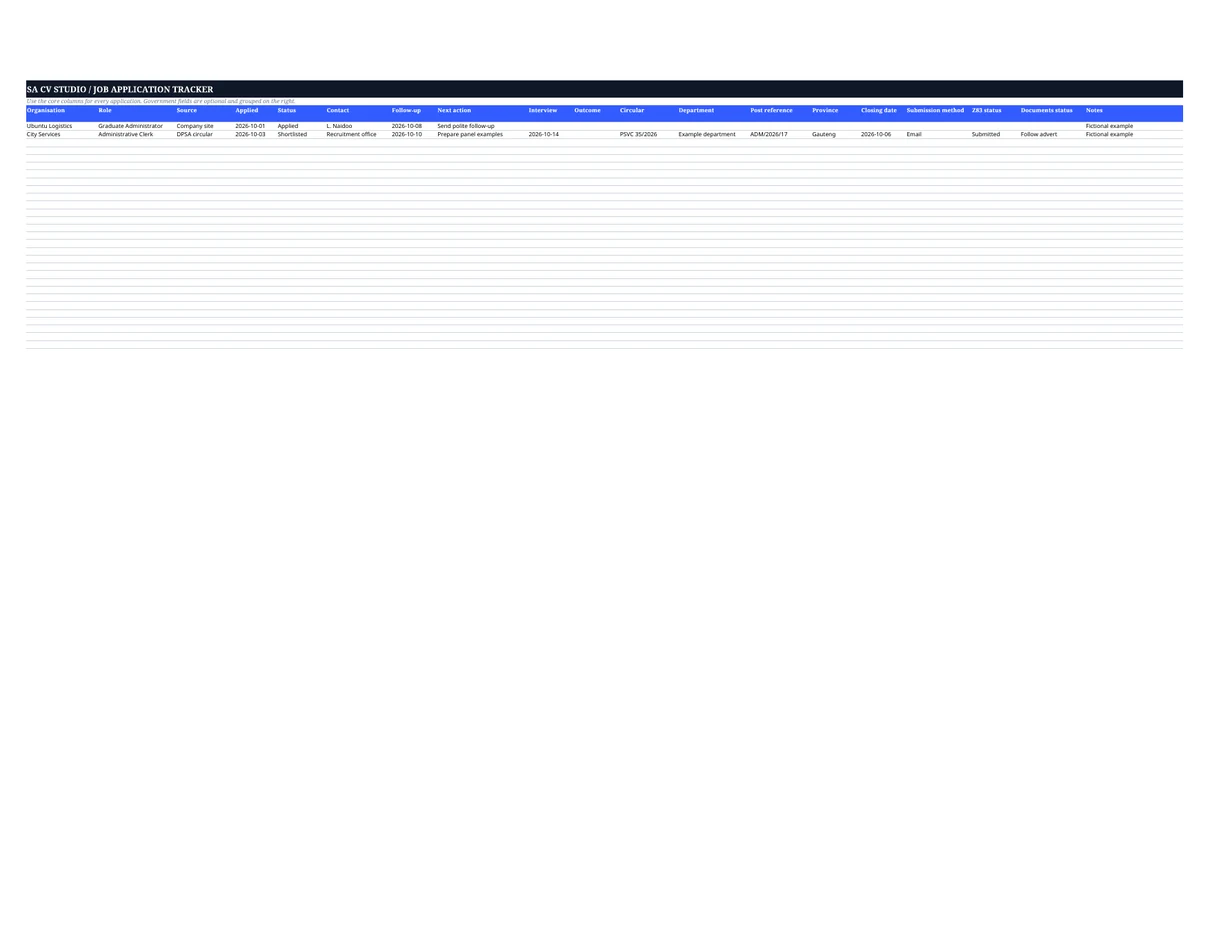
- Tracker to follow up
Where to search
- Job boards: PNet, Careers24, LinkedIn, Indeed
- Free government platforms: SA Youth and ESSA
- Company careers pages
- Government: DPSA circular and provincial sites
- Recruitment agencies that never charge job seekers
Routine
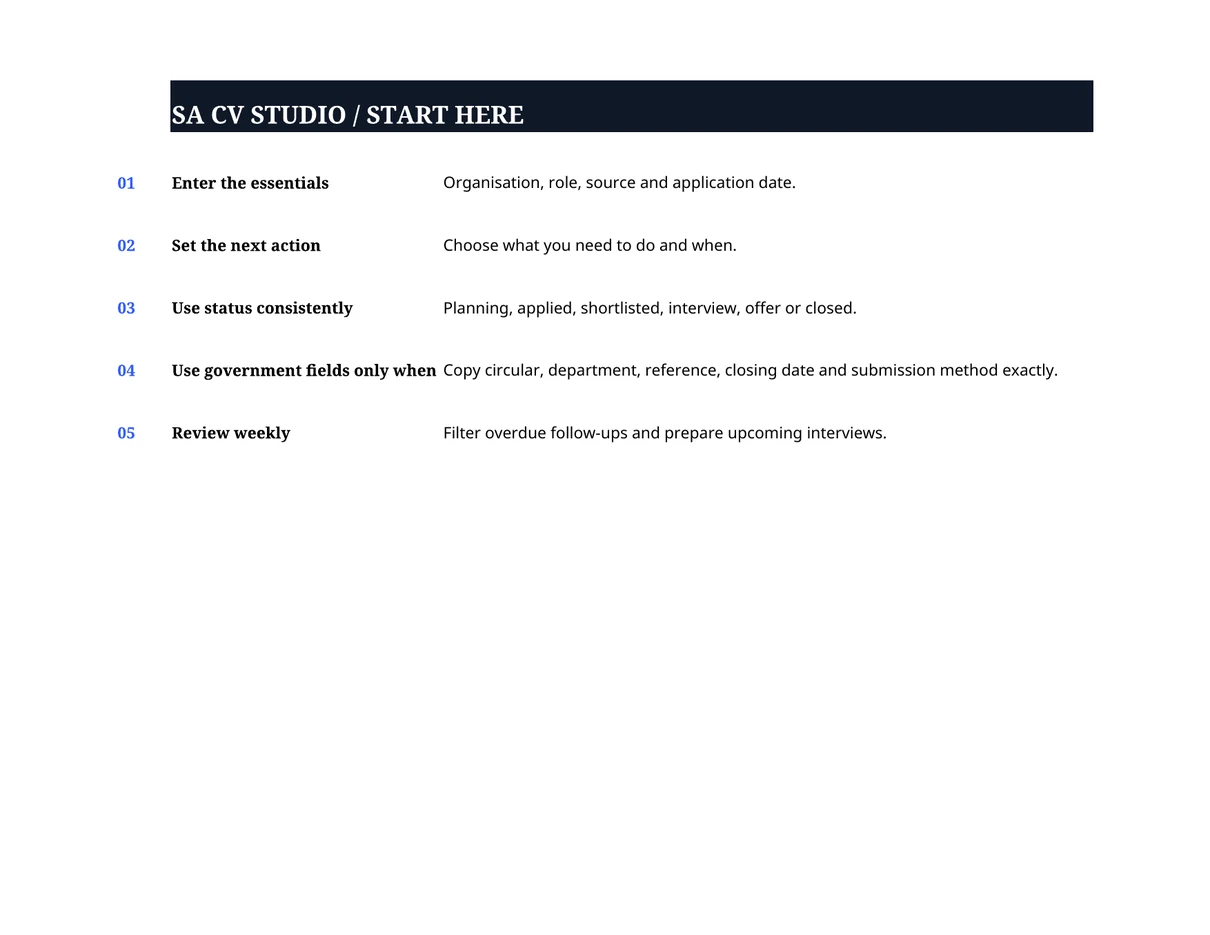
Pick set days to search, set aside time per application to tailor your CV, and track every application with a follow-up date.
Scam warning
Real employers and government departments never ask you to pay for a job, an interview, training or a 'registration fee' to be shortlisted. If someone asks for money or your banking PIN, walk away and report it.
Decoding the job advertisement
To get shortlisted, you must translate the job advertisement into your CV. South African job specs are usually divided into 'Minimum Requirements' (like qualifications) and 'Key Performance Areas' (KPAs). Your CV must mirror the exact terminology used in those KPAs. For example, if the post asks for 'reconciliation of debtor accounts', do not simply write 'financial administration' on your CV.
- Fictional job spec requirement: 'Maintain stakeholder relations and coordinate monthly board meetings.'
- Fictional CV bullet point: 'Maintained key stakeholder relations and successfully coordinated monthly board meetings for 15 executives.'
- Always cross-reference the vacancy on the official employer website, as job details and requirements can change.
Understanding the selection panel
In South Africa, public sector applications (such as those on dpsa.gov.za) and corporate listings go through strict screening processes. HR officers or hiring panels often look at hundreds of CVs. They use a scoring sheet based directly on the advertised requirements. If the job requires a specific professional registration, like SACE, SANC, or PSiRA, they look for this registration number on page one of your CV. If they cannot find it instantly, your application might be set aside.
- Put your professional registration numbers clearly at the top of your CV.
- Ensure your qualifications are listed with the correct, full institution names.
- Verify that your employment dates are clear with no unexplained gaps.
- Keep your CV layout clean and easy for a tired panel member to scan quickly.
How to follow up professionally
Many South African job seekers send their CV and hope for the best. A strategic follow-up can make you stand out, especially with private recruitment agencies or medium-sized businesses. Wait at least one to two weeks after the closing date before making contact. Keep your inquiry brief, polite, and focused on helping them, rather than demanding an update.
- Send a short email referencing the exact job title and reference number.
- Reiterate your enthusiasm and state that you are available for an interview.
- If calling, politely ask if the hiring manager has a convenient moment to speak.
- Keep the conversation professional and respect their internal timelines.
Common questions
Do I need to certify my documents every time I apply for a job?
For private sector jobs, you rarely need certified documents initially. For government jobs, recent regulations mean you often do not need to submit certified documents when applying, only when shortlisted. Always check the specific vacancy instructions on the official department website to confirm their current requirements.
Should I apply if I do not meet every single requirement?
Yes, if you meet the essential minimum requirements, such as a specific degree or professional registration. Preferred or advantageous requirements are negotiable. If you meet most of the other criteria, tailor your CV to highlight your relevant transferable skills and submit your application.
How can I verify if a recruitment agency is legitimate?
Legitimate agencies in South Africa are registered. You can check if they are members of professional bodies like APSO. Most importantly, legally, no legitimate South African recruitment agency is allowed to charge a job seeker a fee to find them work or to register on their database.
Free guides for this
Job hunting
How to plan a focused job-search week in South Africa
Job hunting
How and when to follow up after a job application
Job hunting