Free South African guide
Apply for learnerships with a focused CV and letter.
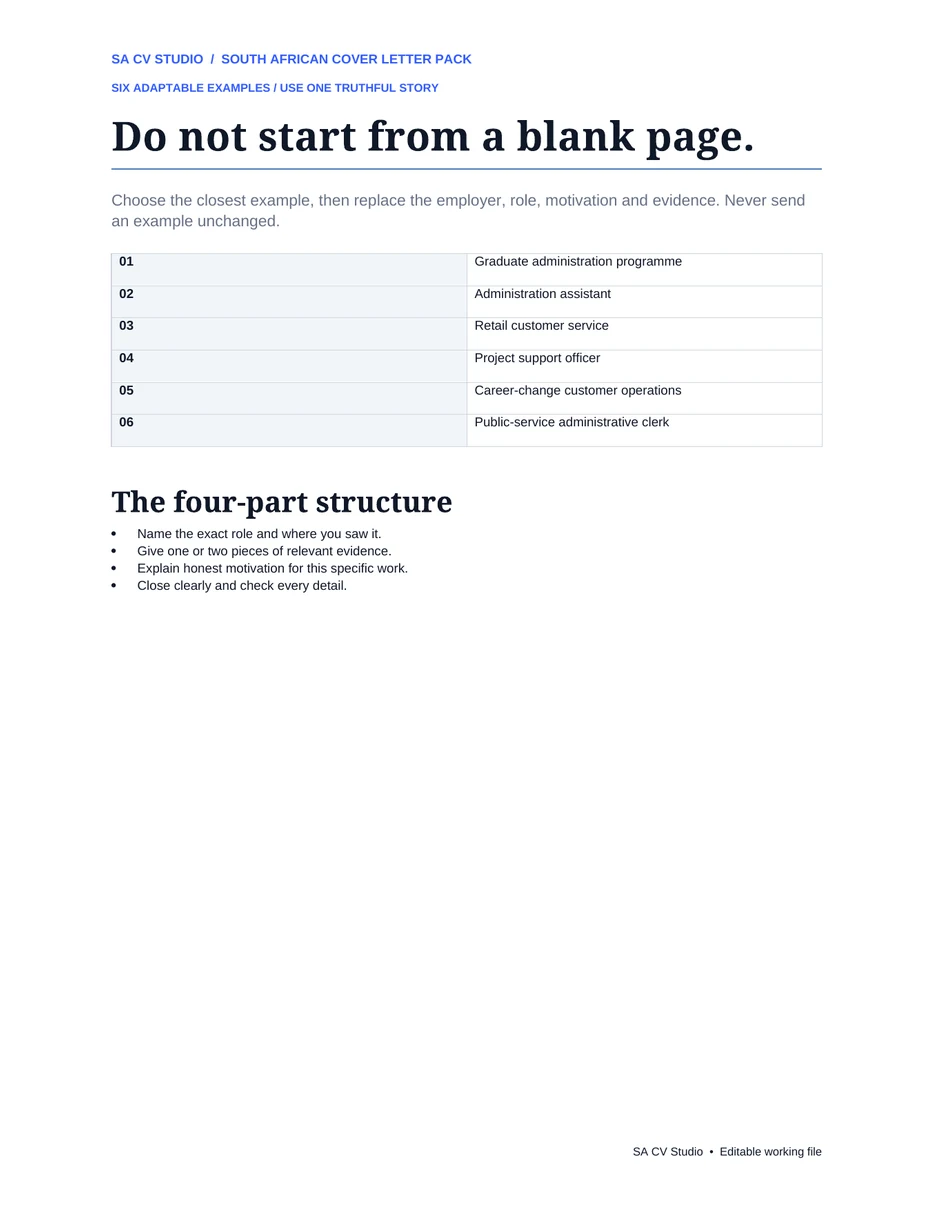
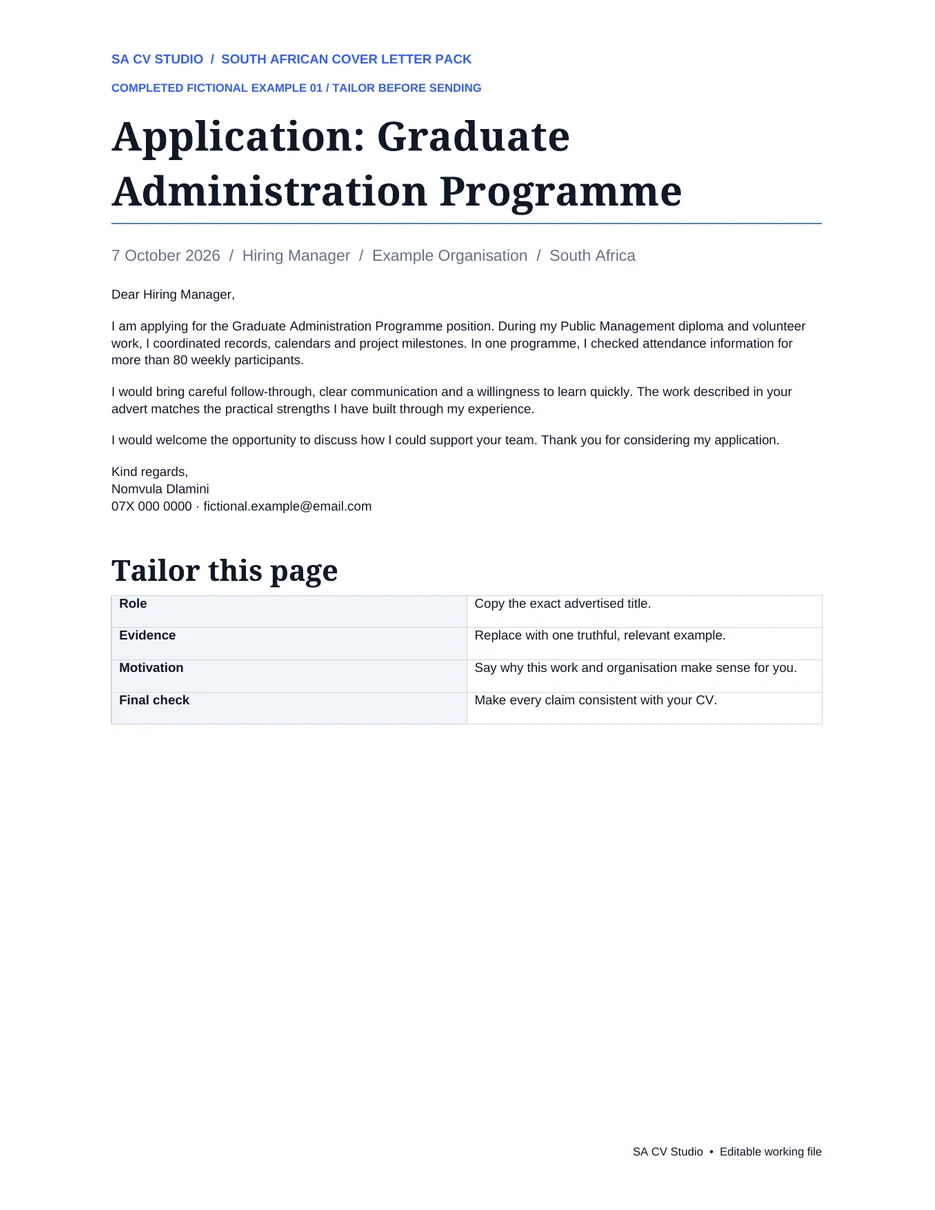
Learnership and internship applications reward a clear CV and a short, specific motivation. The toolkit gives you both, with examples you can adapt.
- Entry-level CV layout
- Adaptable cover-letter examples
- Tracker for closing dates and stipend details
- Scam warning signs to check before applying
What learnership selection panels look for
Panels evaluating learnership applications look for coachability, basic literacy, and genuine interest. Since you might not have formal work experience, they focus on your attitude, school projects, community involvement, or volunteer work. They want to see that you understand what the specific sector does and that you are ready to learn.
To make a good impression, ensure your application matches the specific sector you are applying to. Avoid using the exact same generic motivation letter for different industries like banking and construction.
- Clear proof that you meet the minimum requirements, such as a Matric certificate with the required pass marks.
- Reliable contact details where you can be reached quickly for assessments or interviews.
- A clean, readable layout that does not hide your lack of experience behind confusing graphics.
How to write CV lines with no formal experience
If you have never had a formal job, you can still show your skills. Use school activities, community work, or household responsibilities to prove your reliability. Focus on action verbs and outcomes. Always verify the application instructions on the official employer website or sayouth.mobi before submitting.
- "Organised the weekly school sports equipment register, ensuring all items were accounted for." (Fictional school example)
- "Assisted a local community soup kitchen with food preparation and basic stock counting on weekends." (Fictional volunteer example)
- "Completed a basic computer literacy course, learning to use spreadsheets and word processors." (Fictional skill example)
Post-application steps and staying safe
After submitting your application, keep a written record of the closing date, the company name, and the specific programme. Check your emails and SMS messages daily, as recruiters often send short notices for tests or interviews. Always protect yourself from scams by checking the official employer careers page or the Department of Employment and Labour website.
- Never pay any administration, medical test, or application fee to secure a learnership.
- Do not send certified copies of your ID or certificates to untrusted, personal email addresses like Gmail or Yahoo domains.
- Verify the physical address of the interview venue on official maps before you travel.
Common questions
Can I apply for a learnership if I do not have a Matric certificate?
Yes, some learnerships accept a Grade 9, 10, or 11 report, or an equivalent NQF level qualification. Always read the specific advertisement carefully and confirm the minimum entry requirements on the employer's official website before applying.
What is the difference between an internship and a learnership?
Learnerships combine practical on-the-job training with theoretical learning, leading to a registered qualification. Internships are usually for graduates who already have a tertiary qualification but need practical work experience to enter the job market.
Do I have to pay to register on SA Youth or apply for a learnership?
No. Legitimate platforms like sayouth.mobi are completely free to use, and many are zero-rated for data. Genuine employers and government departments will never ask you for money to apply, register, or secure a position.
Free guides for this
Job hunting
How to apply for learnerships and internships in South Africa
CV writing
How to write a cover letter for a South African job
Job hunting