Learnerships 2026 · Free South African guide
How to find and apply for learnerships in 2026.
A learnership combines training with work experience and leads to a registered qualification. Most are for unemployed youth, and a good one never charges you to apply.
- Where real learnerships are advertised
- Typical requirements and documents
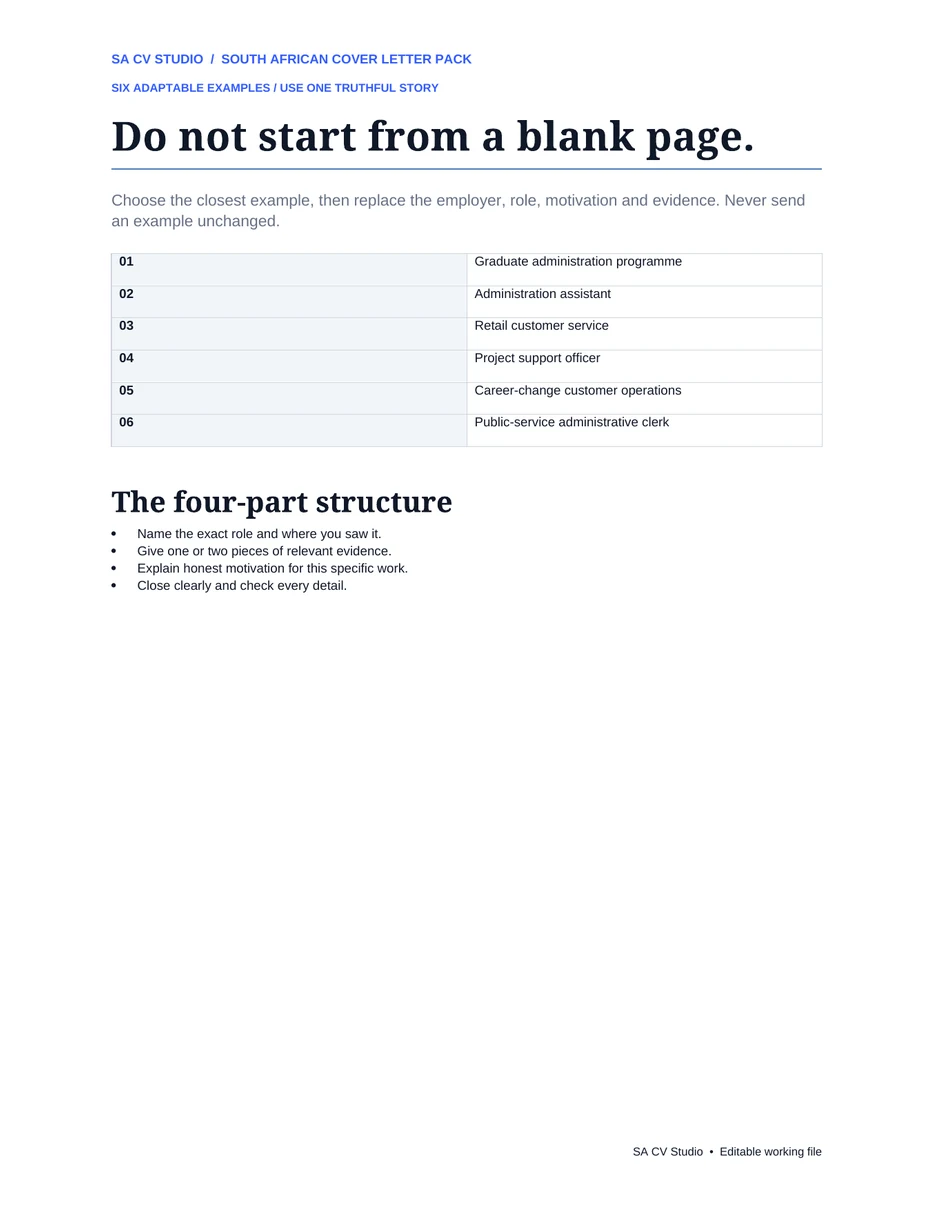
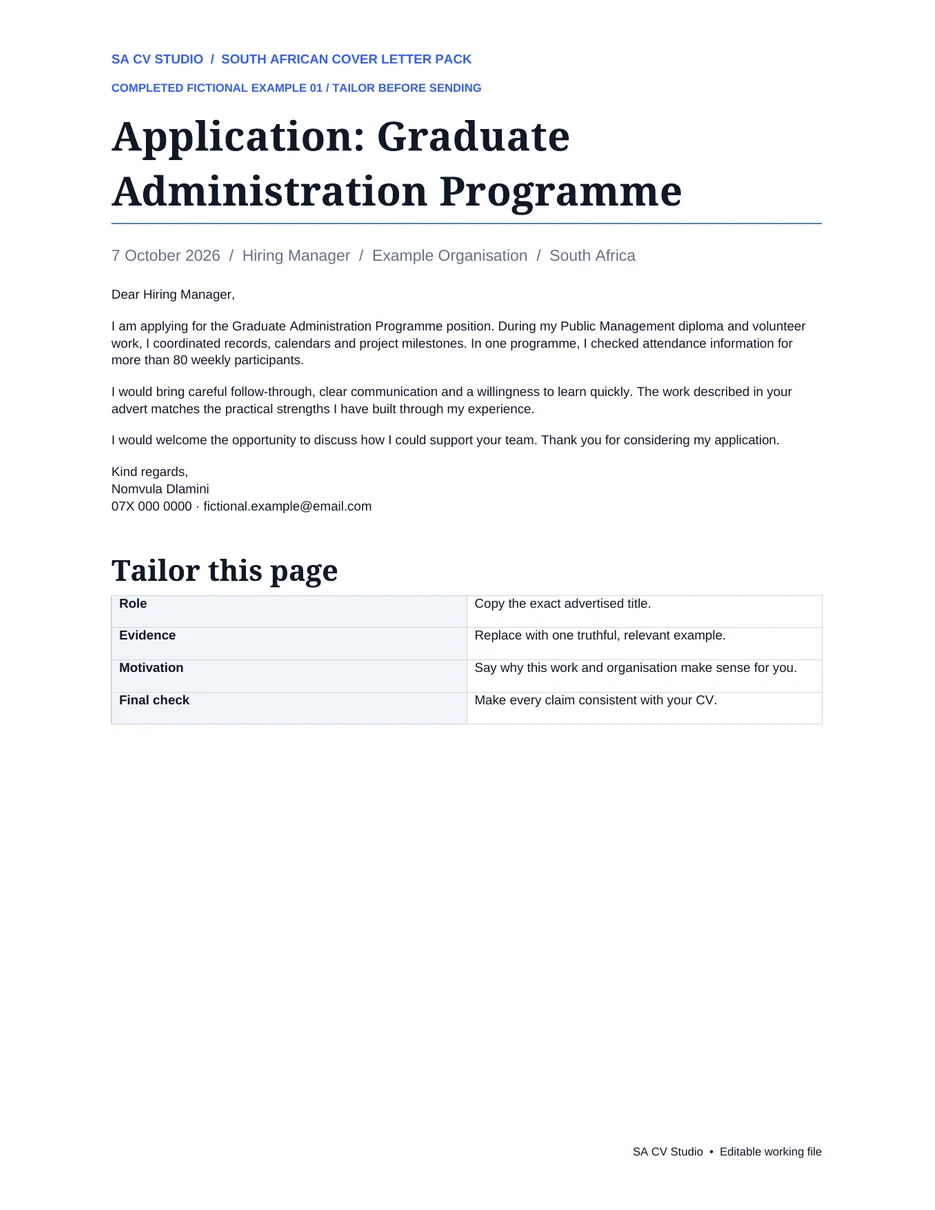
- CV and motivation letter examples
- Tracker for closing dates
Where to find real learnerships
Check SETA websites, SA Youth (sayouth.mobi), ESSA, and the official careers pages of employers. Be careful of social media posts that ask for money or your banking details.
Common requirements
- South African ID
- Matric certificate or Grade 12 results (some accept lower)
- Usually aged 18 to 35 and unemployed
- A short CV and motivation letter
What makes an application stand out
A one-page CV that shows reliability (school roles, volunteering, informal work) and a short motivation saying why this field and this employer.
What selection panels look for
Selection panels often screen hundreds of applications for a single learnership. They look for teachability, reliability, and local proximity. Since you might not have formal work experience, panels focus on your attitude and basic skills. They check if you live near the training site to ensure you can arrive on time daily without spending your entire stipend on transport.
- Proof of local residence (such as a utility bill or a letter from your local councillor)
- Clear, reachable contact details (an active phone number and a professional email address)
- Neat, readable formatting with zero spelling errors
- A positive attitude towards learning new skills and practical tasks
How to write your CV with zero formal experience
When you do not have formal job experience, your CV must highlight community involvement, school roles, or informal work. Use active verbs to show your responsibility. Here are fictional examples of how to write your CV experience lines:
- Volunteer Cashier at Grace Church Food Bazaar (2024): Handled cash payments and balanced the till daily with zero errors.
- Community Youth Leader in Soweto (2023-2024): Organised weekly sports practices and kept attendance registers for 30 youth.
- Informal Assistant at Sibanda Spaza Shop (Saturdays): Managed stock levels, unpacked deliveries, and assisted customers with queries.
Step-by-step checklist before hitting submit
Before you email your application or upload it to a portal, you must double-check your documents. A single missing document can get your application disqualified immediately. Always verify the current application steps on the employer's official website, as recruitment requirements can change without notice.
- Check that your certified documents (ID and Matric certificate) are certified within the last three months, or as requested.
- Ensure your PDF files are small enough to email (aim for under 2MB in total).
- Test your phone number by calling it from another phone to make sure it rings and your voicemail is set up professionally.
- Save your CV file with a professional name, such as Thabo_Mokoena_CV.pdf.
Common questions
Do I have to pay to apply for a learnership?
No. Real learnerships do not charge application fees. Treat any request for money as a scam warning sign.
Do learnerships pay?
Most pay a monthly stipend. The amount is stated in the advert.
Can I apply for a learnership if I have a degree or diploma?
Yes, but you must check the specific entry requirements. Some learnerships are strictly for matriculants, while others target graduates. Read the official advert carefully to ensure you are not overqualified or underqualified for that specific programme.
What happens if my certified documents are older than three months?
Many employers and government departments automatically disqualify applications with outdated certifications. To be safe, visit your nearest South African Police Service (SAPS) station or Post Office to get fresh copies certified before you submit your application. Always verify the certification validity window on the official advert.
How long does it take to hear back after applying?
It typically takes between four to twelve weeks after the closing date to receive feedback. If you do not hear back within three months, you can generally assume your application was unsuccessful. Keep applying for other opportunities on official sites like sayouth.mobi while you wait.
Free guides for this
Job hunting
How to apply for learnerships and internships in South Africa
CV writing
How to write a cover letter for a South African job
Job hunting